Retired teachers often reminded us of the real end of teaching, and this is one that many of would benefit from keeping forefront in our minds.
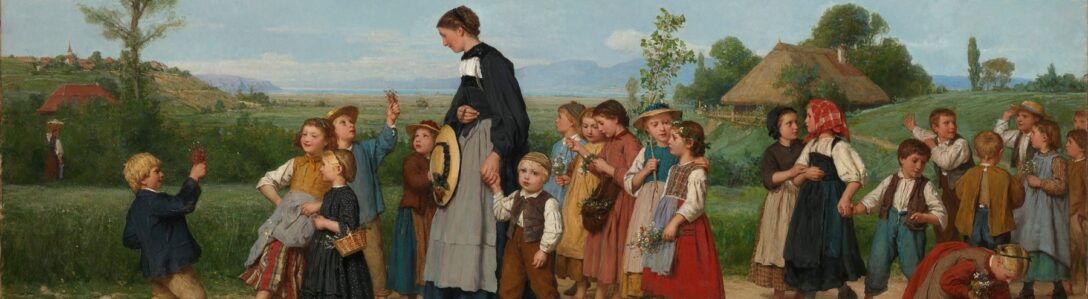
At a recent church social, I chatted with an older gentleman about his career in education. He’s more than twenty years retired now; however, he still spoke with energy and enthusiasm. I asked him what he had taught during his many, many years of teaching. I expected a response along the lines of “high school science” or “middle school math”, but he delivered a somewhat-playful, quick-witted one word response: “kids”. Of course, he elaborated about how over the years he had taught science, math, PE, English, and literature. But, his initial response has returned to mind many times since.
Although I have had the privilege of observing many excellent teachers and reading many authors’ insights about what distinguishes great teachers, Mr. Pence’s words–or rather his single word–may be the wisest I have ever heard. For, in that one word, Mr. Pence spoke volumes. He was not down-playing the importance of knowing and loving one’s subject. He was not disregarding pedagogical strategies. He was not denying the power of relationships. He was not dismissing the importance of cultivating one’s own habits and virtues. Rather, he was deftly observing the true end of teaching: the students themselves.
A great teacher’s goal is to improve his students–their minds, yes, and perhaps more importantly, their hearts and souls–to impart knowledge and wisdom that will help the next generation be better than our own–to hope that our children will be better than ourselves.
This is not a controversial statement; but the goal itself is so lofty that it is easy to lose sight of amidst the busy practicalities of a teacher’s daily schedule. Often we find ourselves so pressed for time to respond to an email, work through a pile of grading, unjam the printer, or simply prepare a beautiful lesson that it becomes difficult to eat lunch with our students, play four-square during recess, or simply interact with them in the hallways. But the real work of a teacher does not just happen within the classroom; it happens in those moments we too-often–struggle to find time for.
What are we to do then? How can we prevent ourselves from getting so lost in the pursuit of mastering place value–or irregular verbs–or Homer–or any of the beautiful topics we have the privilege of studying–that we miss the opportunity to teach our students?
We must adopt the mindset of Mr. Pence. When we think about ourselves, our craft, our lessons, we must consider our students before our subjects. What do we teach: kids? How do we teach them? Through music, math, English, art, science, literature, PE, history, Latin. Thank you for the reminder, Mr. Pence.